Sodium Hydroxide Dissolves In Water Physical Or Chemical Change . Sodium hydroxide to copper (ii) sulphate solution produces a. Hydrochloric acid reacts with potassium hydroxide to produce a salt, water, and heat. Lab 4 Chemical and Physical Changes from www.chemistryland.com Water is heated and changed to steam. Hydrochloric acid reacts with potassium hydroxide to produce a salt, water, and heat. So with this, milk souring is a chemical exchange.
A Chemical Reaction Has Reached Equilibrium When. At equilibrium, concentrations of all substances are. In a chemical reaction, chemical equilibrium is the state in which both the reactants and products are present in concentrations which have no further tendency to change with time, so that there is no observable change in the properties of the system.
PPT Reaction Rates and Equilibrium PowerPoint Presentation, free from www.slideserve.com
At equilibrium, concentrations of all substances are. E) the rate of the forward reaction equals the rate of the reverse reaction. Q&a by tamdoan · march 15, 2022 · 0 comment.
If Q Does Not Equal K, Reaction Is Not At Equilibrium.
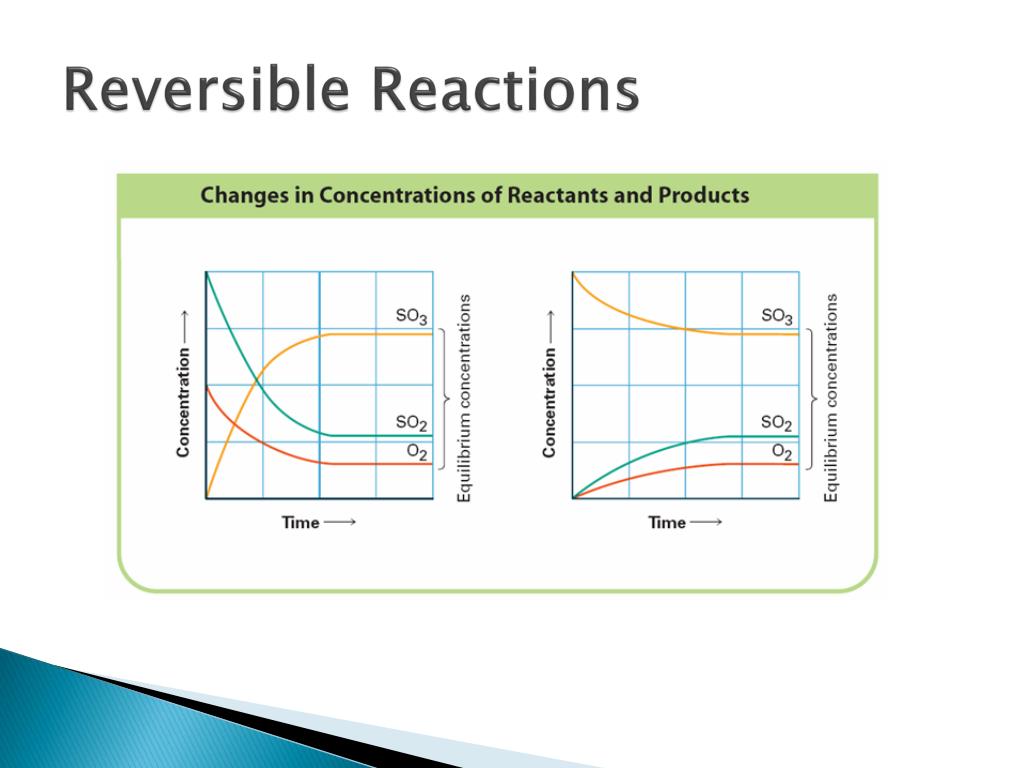
After some time, the forward and back (reverse) reaction rates remain the same, meaning that. This process continues until the forward and reverse reaction rates become equal, at which time the reaction has reached equilibrium, as characterized by constant concentrations of its reactants and products (shaded areas of b and c). A chemical reaction that reaches a state of.
At Equilibrium, The Concentrations Of Reactants And Products Can Be Predicted Using The Equilibrium Constant, Kc, Which Is A Mathematical Expression Based On The Chemical Equation.
To further explain this, let’s say chemical a reacts with chemical b to form chemical c and d. A chemical reaction has reached equilibrium when a the concentrations of. The chemical reaction that has reached equilibrium.
The Amount Of Each Of The Components,.
An equilibrium condition occurs when the rate of the forward chemical reaction is equal to the rate of the reverse chemical equation. The following diagrams show the chemical reaction with time: The reaction has reached chemical equilibrium the point at which forward and reverse chemical reactions balance each other’s progress.
A Chemical Reaction Has Reached Equilibrium When The Rate Of The Forward Reaction Equals The Rate Of The Reverse Reaction.
A chemical reaction has reached equilibrium when a. The above diagram shows the equilibrium in reaction. Which one of the following statements is incorrect??
A Chemical Reaction Has Reached Equilibrium When A) The Concentrations Of Reactants And Products Are Equal.
Chemical equilibrium is reached when the forward and reverse reaction rates are equal. Concentration of reactants affects the rate of the reaction. Equilibrium is reached in chemical.


Comments
Post a Comment